

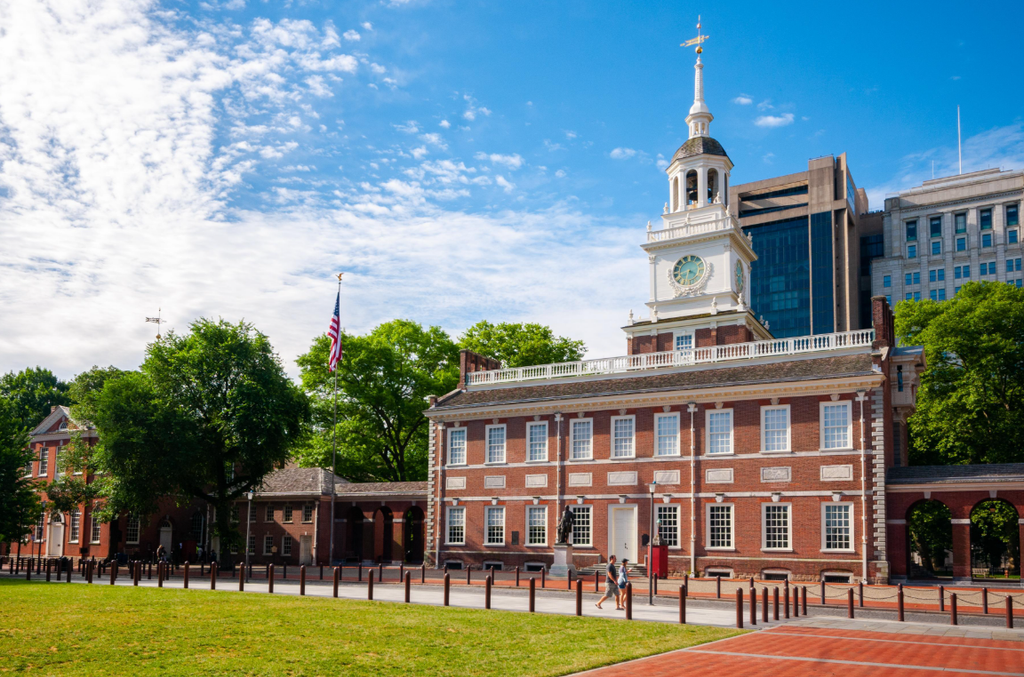
The Story Behind Its 250th Anniversary
In 2026, the United States of America marked a historic milestone: 250 years since the adoption of the Declaration of Independence. Across the country, museums, historical institutions, educational organisations and communities have used the anniversary to revisit one of the most consequential events in modern history.
But what actually happened in 1776? Did American leaders simply gather in a room, sign a document and suddenly create a country? Was independence achieved on July 4, as millions of people celebrate every year? And why did the decision made by representatives of thirteen British colonies eventually influence political movements far beyond North America?
The real story is considerably more complicated.
America’s independence was the result of years of political disagreement, economic tension, protests, military conflict and negotiations. The Declaration itself was not the end of the Revolutionary War, nor was it signed by all the delegates on July 4, 1776.
The events surrounding its creation also reveal contradictions in the history of the new nation. A document declaring that all men were created equal emerged from a society in which slavery remained legal, women had limited political rights and Indigenous nations faced growing pressure on their ancestral lands.
Two and a half centuries later, these questions remain important to understanding the American founding.
As the country continues its 250th-anniversary commemorations throughout 2026, it is worth looking beyond the fireworks and familiar historical images to understand what happened, why it happened and how a decision made in Philadelphia changed the world.
Why Were the American Colonies Fighting Against Britain?
To understand the Declaration of Independence, it is necessary to go back several years before 1776.
During the eighteenth century, Britain controlled thirteen colonies along the eastern coast of North America. These colonies included settlements that eventually became states such as Massachusetts, Virginia, Pennsylvania, New York, Georgia and others.
For much of the colonial period, Britain and the colonies maintained political and economic relationships within the British Empire. The colonies traded with Britain, followed British laws and recognised the authority of the British monarch.
However, the relationship began to deteriorate after the Seven Years’ War, which ended in 1763.
Britain had accumulated substantial financial costs during the conflict and wanted its American colonies to contribute more towards the expenses of maintaining the empire and defending its territories.
The British government introduced a series of measures intended to raise revenue and strengthen imperial control.
Among the most controversial was the Stamp Act of 1765, which required many printed materials, including newspapers, legal documents and commercial papers, to carry a government-issued stamp.
Many colonists opposed the measure because they believed Parliament was imposing taxes on them without their representatives having a direct vote in the British legislature.
Their objection became associated with the phrase “No taxation without representation.”
The disagreement was not simply about the amount of money being collected. It concerned a larger political question: could a government impose laws and taxes on people who had no elected representatives in that government?
The Stamp Act was eventually repealed in 1766, but the dispute did not end.
Other controversial measures followed, including the Townshend Acts of 1767, which imposed duties on imported goods such as glass, paper, paint, lead and tea.
Resistance increased, and British authorities responded with attempts to enforce imperial laws more firmly.
The relationship between Britain and its American colonies was becoming increasingly difficult to repair.
How Did Protests Turn Into a Revolution?
The dispute between Britain and the colonies gradually moved beyond political arguments and economic protests.
One of the most important events was the Boston Massacre of March 5, 1770.
British soldiers stationed in Boston became involved in a confrontation with local residents. The soldiers fired into the crowd, killing five colonists.
The incident became a powerful symbol for opponents of British policies. Political activists used it to argue that the British military presence in the colonies threatened the safety and liberty of ordinary people.
Another major confrontation occurred in December 1773.
Angry colonists protested against British taxation and commercial policies by boarding ships in Boston Harbour and throwing hundreds of chests of tea into the water.
The event became known as the Boston Tea Party.
The British government responded with a series of punitive measures in 1774, which the colonists called the Intolerable Acts or Coercive Acts.
Among other measures, Britain closed Boston Harbour until compensation was made for the destroyed tea and altered the government of Massachusetts.
Instead of ending resistance, these measures encouraged greater cooperation between colonies that had previously pursued many of their political disagreements separately.
In September 1774, representatives from twelve of the thirteen colonies gathered in Philadelphia for the First Continental Congress.
They discussed their grievances, coordinated resistance and organised a boycott of British goods.
For the first time, representatives from much of colonial America were attempting to confront Britain through a united political body.
However, not everyone wanted independence. Many colonists still hoped to repair their relationship with the British Crown.
The possibility of reconciliation was becoming increasingly difficult, but independence had not yet become the agreed objective of all the colonies.
When Did the American Revolutionary War Actually Begin?
The American Revolutionary War began before the Declaration of Independence was adopted.
On April 19, 1775, British troops and colonial militia clashed at Lexington and Concord in Massachusetts.
The fighting began after British forces moved to seize military supplies held by colonial opponents.
The exact identity of the person who fired the first shot at Lexington remains uncertain. Nevertheless, the fighting marked the beginning of open armed conflict between British troops and colonial forces.
The Second Continental Congress met in Philadelphia in May 1775.
It became the central political body coordinating the colonial response to the war. Its members organised military resistance and eventually appointed George Washington to lead the Continental Army.
Washington, a Virginia planter and experienced military officer, was given the task of organising the colonies’ forces against one of the most powerful military empires in the world.
Even after fighting began, however, some colonial leaders continued hoping for reconciliation.
In July 1775, Congress approved the Olive Branch Petition, an appeal to King George III seeking a peaceful resolution of the dispute.
The King rejected this approach. In August 1775, he declared the colonies to be in a state of open rebellion.
The political conflict was becoming a full-scale war.
By early 1776, the question of whether the colonies should remain under British rule was no longer an abstract political discussion.
For many leaders, independence was becoming a serious possibility.
Why Did Thomas Paine’s Common Sense Change the Debate?
One of the most influential publications in the movement towards independence appeared in January 1776.
It was a pamphlet called Common Sense, written by Thomas Paine, an English-born writer who had settled in British North America.
Paine argued that it made little sense for an entire continent to remain politically dependent on a distant island.
He also challenged the idea that hereditary monarchy was a legitimate form of government.
His writing was direct, accessible and designed for ordinary readers rather than only wealthy political leaders.
This mattered because the arguments surrounding independence had previously been concentrated among political representatives, merchants, lawyers and educated members of colonial society.
Common Sense helped take the debate to a much wider audience.
It encouraged readers to question the legitimacy of British rule and consider the possibility of creating an independent republic.
The pamphlet became widely circulated and helped strengthen support for separation from Britain.
It did not single-handedly cause independence, but it contributed significantly to the political atmosphere in which the Declaration was produced.
By the middle of 1776, more colonial representatives were prepared to consider independence.
Who Decided That America Should Become Independent?
The move towards independence was not the decision of one individual.
It emerged through debates and votes within the Second Continental Congress, the political body representing the thirteen colonies.
On June 7, 1776, Virginia delegate Richard Henry Lee introduced a resolution proposing that the colonies should become free and independent states.
The proposal was significant because it was an explicit call to end political allegiance to Great Britain.
However, not every colony was ready to support it immediately.
Some delegates had instructions from their colonial governments that prevented them from voting for independence without further approval.
Others remained concerned about the military and diplomatic consequences of declaring separation.
Congress postponed its final consideration of the resolution until July.
At the same time, its members recognised that if independence was approved, they needed a formal statement explaining the decision to the world.
On June 11, 1776, Congress appointed a committee of five men to prepare the document.
The members were:
- Thomas Jefferson of Virginia.
- John Adams of Massachusetts.
- Benjamin Franklin of Pennsylvania.
- Roger Sherman of Connecticut.
- Robert R. Livingston of New York.
This group became known as the Committee of Five.
Jefferson was assigned the main task of preparing the initial draft.
The committee’s responsibility was to explain why the colonies believed separation from Britain was justified and why the international community should recognise their claim to independence.
Who Actually Wrote the Declaration of Independence?
Thomas Jefferson is widely recognised as the principal author of the Declaration of Independence.
He was selected because of his reputation as a talented political writer and his ability to express complicated political arguments in persuasive language.
Jefferson prepared his first draft between June 11 and June 28, 1776.
He drew on political ideas associated with the Enlightenment, including natural rights, the legitimacy of government and the relationship between rulers and the governed.
He also drew on existing political documents and arguments, including earlier declarations of rights.
However, the Declaration was not written entirely by Jefferson and accepted without changes.
John Adams and Benjamin Franklin reviewed his draft. The full committee also revised it before submitting it to Congress.
The Library of Congress records numerous alterations made during the drafting process, including changes by the committee.
Congress subsequently debated the document and made additional revisions before adopting the final text.
The document therefore reflects the work of Jefferson, the Committee of Five and the wider Continental Congress.
One of the most important parts of the document was its argument that governments existed to protect people’s rights and derived their authority from the consent of the governed.
This challenged traditional arguments that political authority came simply from hereditary monarchy or the unquestioned power of a ruler.
What Happened on July 2 and July 4, 1776?
This is one of the most interesting parts of the American independence story.
Many people assume that American independence was first approved and formally declared on July 4.
However, the political decision and the adoption of the written Declaration were two separate events.
On July 2, 1776, the Continental Congress adopted Richard Henry Lee’s resolution for independence.
Twelve of the thirteen colonies supported the decision. New York did not vote at that time because its delegates were awaiting further instructions from their colonial convention.
The decision effectively authorised the colonies to separate politically from Great Britain.
Two days later, on July 4, Congress completed its debate and officially adopted the text of the Declaration of Independence.
This is why July 4 became the date associated with American independence.
Following its adoption, the Declaration was printed by John Dunlap, the official printer to Congress.
The printed copies were distributed to colonial governments, committees and military commanders so that the decision could be communicated throughout the colonies.
On July 8, a public reading of the Declaration took place in Philadelphia.
On July 9, General George Washington arranged for the document to be read to the Continental Army in New York.
The news spread throughout the colonies and across the Atlantic.
The Declaration had announced a major political change, but the war itself was far from over.
Did Everyone Sign the Declaration on July 4?
This is another widespread historical misconception.
The Continental Congress adopted the Declaration on July 4, 1776, but the famous parchment document was not signed by all the delegates on that day.
On July 19, Congress ordered that the Declaration be formally written on parchment and signed by its members.
The signing of the engrossed parchment document began on August 2, 1776.
John Hancock, the president of the Continental Congress, signed first. His large signature became one of the most recognisable features of the document.
Other delegates signed the document according to the states they represented.
Eventually, 56 delegates signed the Declaration, although not all of them were present on August 2.
Some signed later, and several delegates who supported the Declaration did not ultimately sign the parchment copy.
George Washington, despite leading the Continental Army, did not sign it. He was away with his troops.
The difference between July 4 and August 2 is important because it helps explain how the Declaration developed from an approved political statement into the formal parchment document preserved today.
The original engrossed Declaration is now held at the National Archives in Washington, D.C.
What Did the Declaration Actually Say?
The Declaration of Independence was more than a statement announcing that the colonies no longer recognised British authority.
It was also an argument intended to justify separation.
The document had several important parts.
1. The Introduction
The opening explains why a people who wish to separate politically from another government should publicly state their reasons.
It presents independence as a decision requiring an explanation to the international community.
2. The Preamble
The preamble contains the famous words:
“We hold these truths to be self-evident, that all men are created equal…”
It continues by describing rights that cannot legitimately be taken away, including life, liberty and the pursuit of happiness.
The preamble also argues that governments receive their legitimate powers from the consent of the governed.
If a government becomes destructive of the purposes for which it exists, the people have a right to alter or abolish it and establish a new government.
These arguments became some of the most influential political ideas associated with the founding of the United States.
3. The List of Grievances
The main body of the document presents a series of complaints against King George III.
The complaints include allegations concerning taxation, colonial administration, the military presence in the colonies and the interference of British authorities in colonial government.
The purpose was to explain why the American representatives believed their relationship with Britain could no longer continue.
4. The Declaration of Independence Itself
The final section formally announces that the thirteen colonies were free and independent states.
It states that their political connections with the British Crown were dissolved.
It also claims the powers of independent states, including the ability to conduct war, negotiate peace, establish trade and form international alliances.
This final section transformed the document from a list of complaints into an official declaration of political separation.
Why Does the Declaration Contain a Contradiction About Freedom and Slavery?
One of the most important questions surrounding the Declaration of Independence concerns the relationship between its language of equality and the existence of slavery.
When Jefferson drafted the document, slavery was deeply established in several American colonies.
Enslaved Africans and their descendants were denied basic freedoms, forced to labour and treated as property under the laws of the period.
Yet the Declaration included a powerful statement about equality and natural rights.
This contradiction has been the subject of historical debate for generations.
Jefferson’s original draft also contained a passage criticising the British Crown for its involvement in the transatlantic slave trade.
That paragraph accused the King of supporting the continuation of the slave trade and was intended to strengthen the case against British rule.
However, the passage was removed during the congressional revision process.
According to records preserved by the Library of Congress, Congress removed the entire paragraph on slavery and the slave trade during its deliberations on July 3 and 4, 1776.
Jefferson later attributed the deletion to objections from delegates representing South Carolina and Georgia, as well as sensitivities among other delegates.
The final Declaration therefore retained its language of human equality while omitting the original passage condemning slavery.
The result was a foundational document whose ideals and historical circumstances were not fully consistent.
It is important not to treat the Declaration as if it immediately ended slavery or granted equal political rights to everyone living in the colonies.
It did neither.
Nevertheless, its language became an important reference point for later movements seeking to challenge slavery, discrimination and unequal treatment.
A document created to justify colonial independence would eventually be invoked by people demanding that the country apply its stated principles more broadly.
What Happened to African Americans During the American Revolution?
African Americans were not simply spectators during the struggle for independence.
Both free and enslaved Black people participated in the Revolutionary War, although their circumstances and motivations differed.
Some fought with the Patriot forces, while others joined British forces after British officials offered freedom to enslaved people who escaped rebel owners and supported the Crown under wartime proclamations.
The National Park Service notes that approximately 5,000 African American soldiers and sailors, including free and enslaved Black men, served in the Patriot forces during the war.
Their participation demonstrates that the Revolution involved people whose lives were directly affected by the political and military decisions of colonial leaders.
For enslaved people, the language of liberty created expectations and opportunities that were often unavailable under the existing social order.
Some sought freedom through military service, escape or petitions.
However, the conclusion of the war did not produce equal freedom for all African Americans.
Slavery continued in the new United States, and the future expansion of the country would bring further conflicts over the institution.
This part of the story is essential to understanding why the Declaration’s promise of equality remains an important subject of historical discussion.
How Did Indigenous Nations View American Independence?
The American Revolution was not only a conflict between Britain and colonial settlers.
Indigenous nations across North America faced difficult decisions as the war spread through their territories.
Many Native communities had their own political interests, alliances, diplomatic relationships and concerns about land.
The revolution threatened to change the balance of power across regions where Indigenous nations had lived for generations.
Some communities supported the British because they believed British imperial policies offered a better chance of limiting colonial expansion onto their lands.
Others supported the American side, while some attempted to remain neutral or became divided internally.
The Haudenosaunee Confederacy, for example, experienced divisions during the conflict.
The war placed enormous pressure on Indigenous communities, and military campaigns devastated settlements and disrupted established relationships.
Even after American independence was recognised, conflicts over land, sovereignty and territorial expansion continued.
For many Indigenous nations, the creation of the United States did not represent an uncomplicated victory for liberty.
It marked the beginning of a new political order that would continue to challenge their control over ancestral territories.
Recognising these different experiences provides a more complete account of the American Revolution.
Did Declaring Independence Immediately Make America a Country?
The Declaration announced political independence, but it did not immediately make the new United States secure, internationally recognised or militarily independent of British power.
The British government rejected the Declaration and continued the war.
The Continental Army faced serious shortages of money, supplies, equipment and trained soldiers.
The British military remained a powerful opponent, and the outcome of the conflict was uncertain.
The Declaration was also important diplomatically.
Once the colonies presented themselves as an independent political entity, they could pursue formal relations with foreign governments.
One of the most important partners became France.
In 1778, France entered into a formal alliance with the United States and provided military and financial assistance.
French support became an important factor in the wider war effort.
The conflict continued across North America and eventually developed into a wider international war involving European powers.
A major turning point occurred in October 1781, when British General Charles Cornwallis surrendered at Yorktown, Virginia, after American and French forces surrounded his army.
Although military activity continued, the British position had become increasingly difficult.
The war was formally concluded through the Treaty of Paris, signed on September 3, 1783.
The treaty recognised the United States as an independent nation and established the boundaries of the new country.
In other words, the Declaration announced independence in 1776, but the war and diplomatic struggle continued for another seven years.
Why Did the American Declaration of Independence Influence the Rest of the World?
The Declaration of Independence became important far beyond North America.
Its arguments about natural rights, political authority and the legitimacy of government challenged traditional assumptions about monarchy and imperial rule.
The American Revolution demonstrated that colonies could attempt to separate from an empire and establish a new political system.
The Declaration also helped the American representatives seek foreign support, particularly from France.
Its language became influential in later political debates and movements concerning constitutional government, independence and individual rights.
However, the influence was not always direct or identical.
Different societies adapted ideas about liberty and political representation to their own circumstances.
The Declaration became part of a much wider international conversation about the rights of individuals and the authority of governments.
Its influence should therefore be understood as part of a broader history of political ideas rather than the sole cause of later revolutions.
Why Is the United States Celebrating 250 Years in 2026?
The United States adopted the Declaration of Independence on July 4, 1776.
Two hundred and fifty years later, July 4, 2026, marked the nation’s 250th anniversary of that founding declaration.
The anniversary is commonly called the Semiquincentennial, a term used for a 250-year milestone.
The official America250 initiative, established through the United States Semiquincentennial Commission, coordinates commemorative activities with museums, historical organisations, educational institutions, communities and other partners.
The Smithsonian Institution has also organised its “Our Shared Future: 250” programme, using exhibitions and public events to explore different aspects of American history and culture.
The National Archives has organised special programmes connected with the Declaration of Independence and the principles associated with the country’s founding.
Although the main July 4 anniversary has passed, America250 has confirmed that commemorations and related events continue through the end of 2026.
The anniversary is therefore not just about celebrating a date. It offers an opportunity to examine how the country developed over two and a half centuries.
It also encourages people to consider the relationship between the ideals expressed in 1776 and the historical experiences of the different communities that shaped the United States.
For historians, educators and readers around the world, the 250th anniversary is an opportunity to revisit the American Revolution with a broader understanding of its causes, consequences and contradictions.
What Does the Story of 1776 Teach Us Today?
The Declaration of Independence remains one of the most recognisable political documents in modern history.
Its importance comes not only from its announcement of separation from Britain but also from the political arguments it presented.
It challenged hereditary authority, described the relationship between government and the governed and articulated principles that later generations would use in debates about freedom and equality.
At the same time, the document emerged from a society that excluded many people from political rights and continued to depend on enslaved labour.
This contrast is an important part of its history.
Understanding the Declaration requires examining both the ideals it expressed and the circumstances in which it was created.
That means studying the political leaders who drafted it, the ordinary people who experienced the war, the enslaved people who sought freedom, the Indigenous nations whose lands were affected and the British and European actors involved in the conflict.
It also means recognising that independence was not achieved in a single afternoon.
The decision of July 1776 was only one stage in a long political and military process that continued until 1783.
The 250th anniversary provides a reason to revisit that history and ask how the United States has interpreted its founding principles across different generations.
The Importance of Preserving History
The story of the Declaration also highlights why historical documents, archives and libraries are so important.
Without preserved records, historians would know much less about the political decisions, debates and disagreements that shaped American independence.
Documents allow researchers to compare different accounts, examine original arguments and identify how historical narratives have changed over time.
This is not unique to American history.
Ancient institutions also played an important role in preserving knowledge and passing information between generations.
For another fascinating look at the importance of historical preservation, explore our article, The Library of Alexandria: What Really Happened to the Ancient World’s Great Centre of Learning?, which examines the history of one of antiquity’s most famous centres of scholarship and the complicated story behind its decline.
Both stories remind us that preserving knowledge is essential to understanding the past.
Final Thoughts: What Really Happened in 1776?
The American Declaration of Independence was not a sudden announcement that instantly ended a war or created a fully functioning nation.
It was the outcome of years of political disagreement, protests, armed conflict and debate among representatives of thirteen British colonies.
On July 2, 1776, the Continental Congress adopted the resolution for independence. On July 4, it approved the text explaining the decision. The parchment document was signed by delegates beginning on August 2, with 56 people eventually adding their names.
The Revolutionary War continued until 1783, when the Treaty of Paris formally recognised American independence.
The Declaration’s language of liberty and equality became enormously influential, but the new country continued to struggle with slavery, unequal rights and the consequences of territorial expansion.
Two hundred and fifty years later, those contradictions remain part of the historical discussion.
The anniversary is therefore more than a celebration of America’s age. It is an opportunity to examine how a political decision made in Philadelphia changed international history, what it promised, who benefited and how its principles have been interpreted over time.
Understanding what happened in 1776 requires looking beyond a date, a document and a group of signatures.
It requires understanding the people, conflicts, ideas and decisions that helped shape the modern world.
Sources and further reading:
- National Archives – Creating the Declaration: A Timeline
https://www.archives.gov/founding-docs/timeline - National Archives – The Declaration of Independence: A History
https://www.archives.gov/founding-docs/declaration-history - National Archives – The Declaration of Independence: How Did It Happen?
https://www.archives.gov/founding-docs/declaration/how-did-it-happen - National Park Service – Overview of the American Revolution
https://home.nps.gov/inde/learn/historyculture/resources-americanrevolutionoverview.htm - Library of Congress – Declaring Independence: Drafting the Documents
https://www.loc.gov/exhibits/declara/declara3.html - Library of Congress – The Declaration of Independence and the Slavery Clause
https://www.loc.gov/exhibits/creating-the-united-states/interactives/declaration-of-independence/slavery/enlarge5-transcribe.html - National Park Service – African Americans in the American Revolution
https://www.nps.gov/inde/planyourvisit/presidentshousesite.htm - Smithsonian Institution – Our Shared Future: 250
https://www.si.edu/250 - Official America250 Programme
https://america250.org/ - US Department of State – The Declaration of Independence, 1776
https://history.state.gov/milestones/1776-1783/declaration

Leave a Reply