

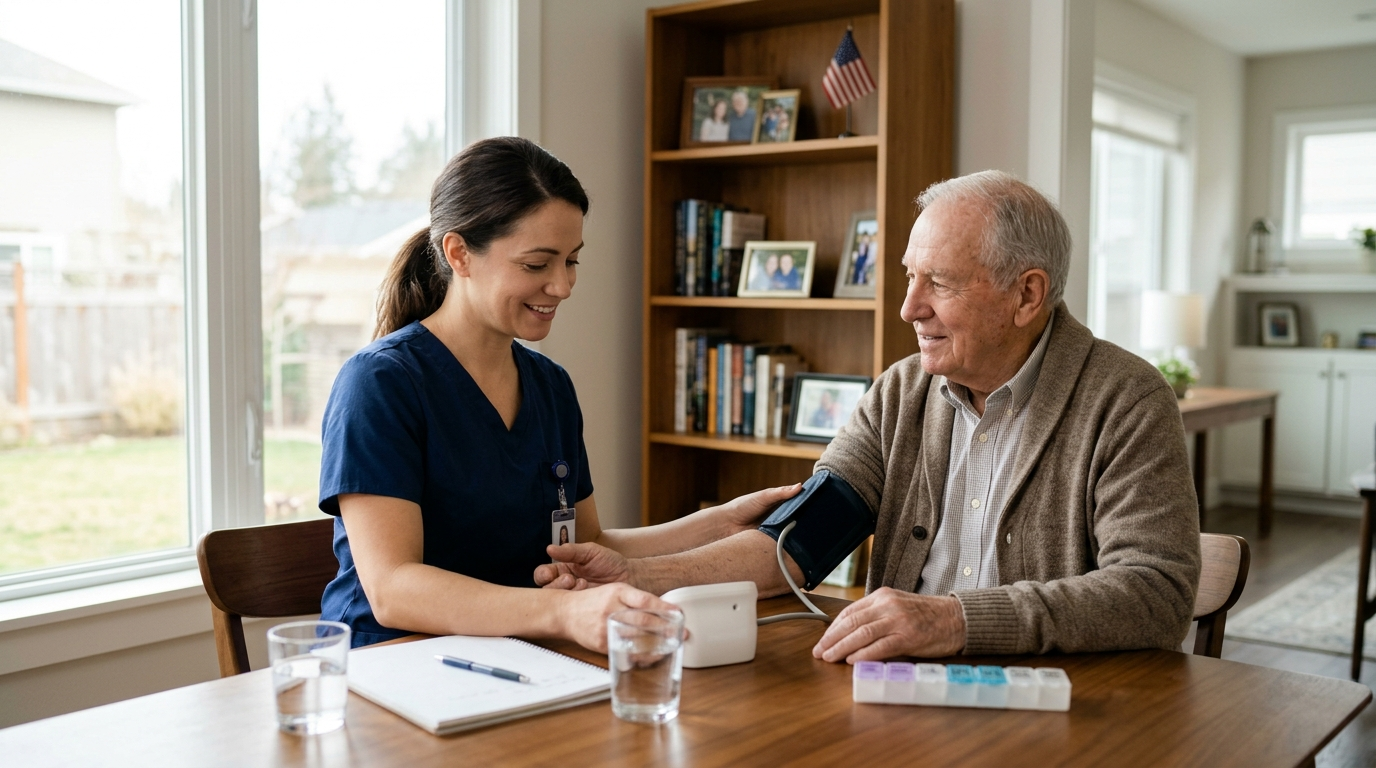
The healthcare industry remains one of the important sources of employment in the United States, and home health care is an area worth watching in 2026. As the population ages and more people require assistance with everyday activities, the demand for workers who provide care and support outside traditional hospital settings continues to grow.
For people searching for employment opportunities in the United States, home health care and personal care work may offer an entry point into the healthcare sector. Some positions require professional qualifications, while others provide employer-based training for applicants who meet the necessary requirements.
However, understanding the difference between home health aides, personal care aides and other healthcare professionals is important before applying. Applicants should also understand the expected salary, working conditions, training requirements and legal employment rules.
This guide explains what home health care jobs involve, how much workers can earn, the qualifications employers may request, where to find legitimate vacancies and what international applicants should know before pursuing employment in the United States.
1. Why Home Health Care Jobs Are Receiving Attention in 2026
Home health care is an important part of the American healthcare system. Rather than receiving all their assistance in hospitals or residential care facilities, many older adults and people living with disabilities receive support in their own homes.
This creates employment opportunities for workers who can assist clients with personal care, household activities, companionship and certain basic health-related responsibilities.
According to the US Bureau of Labor Statistics (BLS), employment of home health and personal care aides is projected to increase by 18% between 2025 and 2035. This is considerably faster than the projected 3% growth for all occupations.
The BLS also estimates approximately 760,500 openings for home health and personal care aides each year, on average, over the projection period.
These figures make the occupation worth considering for people interested in a career involving practical assistance and personal care.
Recent employment trends also provide additional context. Indeed Hiring Lab reported in November 2026 that personal care and home health job postings increased by 4% over the previous year, as measured through October 23, 2026.
Nevertheless, strong long-term employment projections should not be confused with guaranteed immediate vacancies. Hiring conditions vary between employers, states and individual communities.
2. What Does a Home Health Care Worker Do?
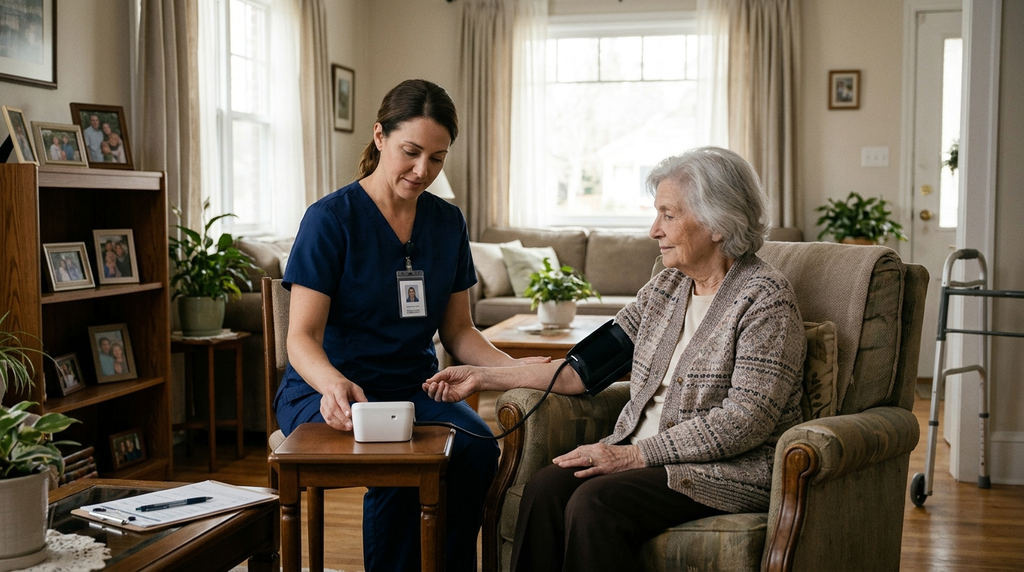
Home health care workers help individuals who need assistance with everyday activities because of age, disability, illness or other personal circumstances.
Their responsibilities depend on the employer, the client’s needs, the worker’s training and applicable state regulations.
Typical duties include:
- Helping clients bathe, dress and maintain personal hygiene.
- Assisting clients with walking, standing and moving around safely.
- Preparing meals according to individual dietary requirements.
- Shopping for groceries and other household necessities.
- Helping with laundry, cleaning and basic housekeeping.
- Reminding clients about scheduled appointments.
- Arranging or assisting with transportation to medical appointments.
- Providing companionship and emotional support.
- Observing changes in a client’s condition and reporting concerns to supervisors.
- Recording care activities and maintaining appropriate client records.
Some home health aides may also perform basic health-related tasks under the supervision of qualified healthcare professionals, depending on their training and state regulations.
For example, certain aides may be permitted to monitor vital signs or assist with prescribed exercises.
However, personal care aides and home health aides should not be confused with registered nurses or other licensed medical professionals. They do not automatically have permission to diagnose illnesses, independently prescribe medication or perform duties outside their authorized scope of practice.
3. Types of Home Health Care Jobs Available
People searching for employment in this industry will encounter several job titles. Understanding their differences can help applicants choose positions that match their experience and qualifications.
A. Home Health Aide
Home health aides assist clients who need personal support and, where permitted, certain basic health-related services.
They may work in private residences or through home healthcare agencies.
Responsibilities can include personal hygiene assistance, monitoring basic health indicators, helping clients move safely and reporting changes in their condition.
Some positions require formal training and competency assessments, particularly when the employer operates under applicable Medicare or Medicaid requirements.
B. Personal Care Aide
Personal care aides generally concentrate on nonmedical assistance.
Their responsibilities may include helping clients prepare meals, complete household activities, maintain personal hygiene and participate in everyday social activities.
Some positions provide opportunities for applicants with limited previous healthcare experience, although employers may still require training, background checks and other screening procedures.
C. Caregiver
Caregiver is a broad employment title used by different employers.
A caregiver may provide companionship, personal assistance, household support or other services depending on the client’s requirements.
Applicants should read the job description carefully because the title does not establish the exact duties, qualifications or legal requirements of a particular position.
D. Certified Nursing Assistant
Certified nursing assistants, commonly called CNAs, provide direct patient care under the supervision of licensed healthcare professionals.
Their responsibilities can include helping patients with daily activities, recording vital signs and supporting nursing staff.
Unlike some personal care positions, CNA employment generally involves state-specific training, competency examinations and certification requirements.
People interested in this career path should check the rules of the state where they intend to work.
4. How Much Do Home Health Care Workers Earn in the USA?
Salary is one of the most important considerations for anyone researching employment opportunities.
According to the US Bureau of Labor Statistics, the median annual wage for home health and personal care aides was $35,800 in May 2025.
This is equivalent to approximately $17.21 per hour.
A median wage is not the same as a guaranteed salary. It represents the midpoint of reported earnings, meaning half of workers earned more and half earned less.
Actual earnings depend on several factors, including:
- State and city of employment.
- Employer and type of healthcare facility.
- Previous experience.
- Training and professional certifications.
- Number of hours worked.
- Whether the position involves overnight or weekend shifts.
- Additional responsibilities and specialized client needs.
Some employers offer hourly employment, while others may arrange different schedules or compensation structures.
Applicants should also investigate whether a position provides benefits such as health insurance, paid leave, retirement contributions or reimbursement for approved work-related expenses.
Estimated Earnings
The following calculation illustrates what an employee might earn at the BLS-reported median hourly wage.
| Working hours | Approximate gross earnings |
|---|---|
| 20 hours per week | $344.20 |
| 30 hours per week | $516.30 |
| 40 hours per week | $688.40 |
These are illustrative calculations using $17.21 per hour. They are not guaranteed employer offers.
For a full-time schedule of 40 hours per week throughout 52 weeks, the approximate annual gross earnings would be $35,797.
Actual take-home income will be lower after applicable taxes and other deductions. Overtime, unpaid leave and differences in working arrangements can also affect earnings.
5. What Qualifications Are Required?
One reason home health care attracts job seekers is that some entry-level positions do not require a university degree.
However, this does not mean that every applicant can immediately begin working without preparation.
The qualifications vary depending on the employer, job title and state regulations.
Educational Requirements
The BLS explains that home health and personal care aides typically need a high school diploma or equivalent, although some positions do not require a formal educational credential.
Employers may prefer applicants who can read instructions, communicate effectively and complete basic documentation.
Applicants with additional healthcare education or relevant experience may qualify for positions with greater responsibilities.
Training Requirements
Training is an important part of preparing for this occupation.
Workers may receive instruction in areas such as:
- Personal hygiene and client safety.
- Infection prevention and control.
- Basic nutrition and meal preparation.
- Emergency response procedures.
- Proper communication with clients.
- Reading and recording basic vital signs.
- Safe movement and transfer techniques.
- Recognizing and reporting changes in a client’s condition.
Some employers provide training after hiring. Others require applicants to complete an approved training programme before employment.
Background Checks
Because home health care workers often enter private residences and assist vulnerable individuals, employers may conduct background checks.
Depending on the position and state, screening may include criminal history checks, identity verification, employment references and other relevant assessments.
Applicants should be prepared to provide accurate information and complete the employer’s screening process.
CPR and First Aid
Some employers require or prefer certification in cardiopulmonary resuscitation (CPR) and first aid.
These qualifications can demonstrate preparedness for certain emergency situations.
Applicants should confirm which certifications are required before paying for a course.
6. Do You Need a License or Certification?
Not every home health care position has identical licensing requirements.
Some personal care jobs may involve employer-provided training, while home health aide positions connected to regulated healthcare programmes can have more specific requirements.
For example, certain agencies receiving Medicare or Medicaid payments must follow federal training and competency requirements for home health aides.
Individual states may also establish additional standards.
Depending on the position, applicants may need to complete approved training, pass a competency evaluation, undergo a background check or obtain a state-recognized credential.
This is why applicants should not assume that a certificate issued in one state automatically satisfies the requirements of another.
Before enrolling in a training programme, check the requirements of the state where you intend to work.
The relevant state health department or licensing authority is a useful starting point.
7. Where Can You Find Home Health Care Jobs in the USA?
Finding a legitimate vacancy requires more than searching for job advertisements on social media.
Applicants should prioritize established employers, verified recruitment platforms and official career pages.
Here are some useful places to begin.
A. Indeed
Indeed is a widely used employment platform where applicants can search for home health aide, personal care aide and caregiver vacancies.
Website: https://www.indeed.com/
Useful search terms include:
- Home Health Aide.
- Personal Care Aide.
- Caregiver.
- Home Care Assistant.
- Entry-Level Caregiver.
Applicants should filter vacancies by location and review the employer’s information before submitting personal details.
B. CareerOneStop
CareerOneStop is sponsored by the US Department of Labor and provides employment information, job-search resources and career guidance.
Website: https://www.careeronestop.org/
It can help applicants explore employment opportunities and identify career resources available in different states.
C. USAJobs
USAJobs is the official federal government employment portal.
Website: https://www.usajobs.gov/
Not every home health care vacancy will appear on this platform, since many such positions are offered by private agencies and healthcare providers.
Nevertheless, it is a legitimate source for people interested in federal employment opportunities.
D. Direct Healthcare Employer Websites
Another useful approach is to search for established home healthcare agencies, assisted living providers and healthcare organizations.
Visit their official websites and look for sections labelled Careers, Jobs or Employment Opportunities.
Applying directly through an employer’s verified recruitment page can help applicants avoid fake advertisements impersonating legitimate organizations.
8. How to Apply for a Home Health Care Job
A well-prepared application can make the recruitment process easier.
Although each employer has its own procedure, the following steps provide a practical starting point.
Step 1: Identify the Right Position
Start by deciding which type of role matches your background.
Someone without professional healthcare experience may prefer an entry-level personal care or caregiver position that provides appropriate training.
An applicant with relevant certification or previous experience may consider more specialized home health aide positions.
Always read the complete job description before applying.
Step 2: Prepare Your Resume
Your resume should present your education, experience, practical skills and relevant training.
If you have previously worked in caregiving, nursing assistance, customer service or another people-focused occupation, describe the responsibilities that demonstrate your ability to communicate and assist others.
Useful skills to highlight include:
- Communication.
- Patience and compassion.
- Time management.
- Personal care assistance.
- Basic record keeping.
- Attention to detail.
- Reliability and professionalism.
- Safety awareness.
Do not claim healthcare qualifications or certifications you do not possess.
Step 3: Prepare Supporting Documents
Depending on the employer, you may be asked to provide:
- A current resume.
- Proof of education.
- Relevant training certificates.
- Professional references.
- Identification and employment eligibility documents.
- Background screening information.
Only submit sensitive personal documents through verified and appropriate recruitment channels.
Step 4: Submit Your Application
Apply through the employer’s official recruitment website or a verified job platform.
Make sure the job title, location and employer information match the original vacancy.
If the employer requests additional information, provide accurate answers.
Step 5: Prepare for an Interview
Employers may ask questions about your experience, availability and approach to assisting clients.
Examples include:
- Why are you interested in home health care?
- How would you respond if a client refused assistance?
- How would you handle an emergency?
- Can you work weekends or overnight shifts?
- How would you protect a client’s privacy?
- What would you do if you noticed an unexpected change in a client’s condition?
Applicants should demonstrate patience, good judgment, respect for clients and willingness to follow professional instructions.
Step 6: Complete the Employer’s Screening Process
If selected, you may need to complete background checks, training, reference verification and other employment procedures.
Read the employment agreement carefully before accepting an offer.
9. Can International Applicants Apply for Home Health Care Jobs in the USA?
This is an especially important question for people researching American employment opportunities from other countries.
The answer depends on the applicant’s immigration status and whether they have legal authorization to work in the United States.
A vacancy appearing on an American recruitment website does not automatically mean that the employer is willing or legally able to sponsor an overseas applicant.
Foreign nationals generally need an immigration status that permits employment or appropriate employment authorization.
Some individuals are already authorized to work because of their immigration status. Others must obtain the appropriate authorization before beginning employment.
Applicants outside the United States should therefore consider the following:
First, check whether the employer accepts international applicants.
Many home care agencies recruit people who are already legally eligible to work in the United States. Their vacancies may not include visa sponsorship.
Second, verify whether the position offers legitimate immigration sponsorship.
Do not assume that a job advertisement promising employment in the United States includes a visa.
Third, research the relevant immigration requirements.
The official US Citizenship and Immigration Services website provides information about employment authorization and immigration procedures.
Website: https://www.uscis.gov/
Fourth, avoid paying unverified recruitment agents.
A person promising guaranteed American employment or a guaranteed visa in exchange for an upfront payment should be treated with caution.
International applicants should understand that home health care employment is not automatically a route to US immigration or permanent residence.
The availability of a vacancy and the applicant’s legal eligibility to accept that job are two separate matters.
10. Important Things to Know Before Accepting an Offer
Although home health care can provide meaningful employment, it is not suitable for everyone.
Applicants should understand the realities of the occupation before accepting a position.
The Work Can Be Physically Demanding
Some workers spend long periods standing, walking and helping clients move between beds, chairs and other locations.
Employers should provide appropriate training on safe handling procedures.
Emotional Patience Is Important
Workers may assist older adults and people dealing with disabilities or long-term illnesses.
Some clients require continuous encouragement, understanding and emotional support.
The ability to remain patient and respectful is an important part of the job.
Working Hours May Vary
Some positions involve standard daytime schedules, while others require evening, weekend or overnight availability.
Applicants should confirm their expected working hours before accepting an offer.
Responsibilities Must Be Clear
A personal care aide should understand the limits of the job.
Workers should not agree to perform medical procedures or other responsibilities for which they lack the required authorization and training.
Salary Should Be Evaluated Alongside Working Conditions
A higher hourly rate does not necessarily mean that a job is better.
Applicants should consider transportation expenses, work schedules, benefits, overtime arrangements and the actual number of paid hours available.
11. How to Avoid Fake Home Health Care Job Offers
Unfortunately, job seekers can encounter fraudulent recruitment advertisements while searching for employment online.
The Federal Trade Commission (FTC) warns that fake recruiters may impersonate legitimate employers and use attractive job offers to obtain money or personal information.
Applicants should watch for these warning signs:
- An employer demands payment before offering employment.
- A recruiter promises unusually high earnings without explaining the responsibilities.
- Someone requests money for a guaranteed job placement.
- A recruiter communicates only through suspicious messaging accounts.
- The employer sends a cheque and asks the applicant to return part of the money.
- The vacancy cannot be verified on the company’s official website.
- The recruiter pressures the applicant to make an immediate payment.
A legitimate recruitment process should provide clear information about the employer, job responsibilities, compensation and hiring requirements.
The FTC’s guidance is straightforward: never pay someone simply for the promise of a job.
Applicants who encounter suspicious recruitment activities can report them through the FTC’s official website:
Taking time to verify an employer can help protect both your money and personal information.
12. Is Home Health Care a Good Career Choice in 2026?
Home health care may be a suitable career option for individuals who enjoy assisting others and want to work in the healthcare support sector.
The occupation has a positive long-term employment outlook, and some entry-level positions do not require extensive formal education.
However, the decision should not be based on projected job growth alone.
Applicants should consider their personal strengths, physical ability, career goals and willingness to work with people who may need regular assistance.
For individuals who want to develop a longer-term healthcare career, home health care experience may also provide exposure to patient support and healthcare environments.
With additional education and appropriate qualifications, workers may choose to pursue other healthcare occupations over time.
Nevertheless, career advancement is not automatic and may require separate training, examinations and licensing.
Frequently Asked Questions
1. Can I get a home health care job in the USA without a university degree?
Yes. Many home health and personal care aide positions do not require a university degree. Some require a high school diploma or equivalent, while others provide employer-based training. Requirements depend on the employer and state.
2. How much do home health aides earn per hour in the USA?
The BLS reported a median hourly wage of approximately $17.21 for home health and personal care aides in May 2025. Actual earnings vary by location, employer, experience and working hours.
3. Is previous experience necessary?
Not always. Some employers consider applicants without previous professional caregiving experience, particularly for positions that provide training. However, relevant experience can improve an applicant’s competitiveness.
4. Do home health care workers need certification?
Requirements vary. Some positions do not require formal certification, while others require approved training, competency assessments or state-recognized credentials.
5. Can foreigners apply for home health care jobs in America?
Foreign nationals may apply when they meet the employer’s requirements and have an immigration status or authorization that permits them to work. A job advertisement alone does not guarantee visa sponsorship.
6. Where can I find legitimate home health care vacancies?
Applicants can begin with established employment platforms such as Indeed, the Department of Labor’s CareerOneStop service and the official career pages of healthcare employers.
7. Are home health care jobs available for part-time workers?
Yes. The BLS reports that most aides work full-time, although part-time work is also common. Schedules depend on client requirements and employer arrangements.
8. Is home health care the same as nursing?
No. Home health and personal care aides provide support within their authorized responsibilities. Registered nurses have separate professional education, licensing and clinical responsibilities.
Conclusion
Home health care jobs represent an employment area worth researching in the United States in 2026. The projected growth in the occupation, the large number of expected annual openings and the availability of some entry-level positions make it relevant to people exploring healthcare support careers.
However, a successful job search requires more than finding an attractive vacancy. Applicants should understand the job responsibilities, verify training and certification requirements, evaluate compensation and apply through legitimate recruitment channels.
For international job seekers, checking legal employment eligibility and understanding visa requirements are equally important.
With proper preparation, realistic expectations and careful research, home health care can be a worthwhile career option for people interested in supporting individuals who need assistance with everyday living.
Disclaimer: This article is for general informational purposes. Salary figures and employment projections are based on published US labor-market data and may change. Applicants should confirm current vacancies, employer requirements, state regulations and immigration eligibility through official sources before making employment or financial decisions.
Sources and credibility
The article relies on primary and established sources:

Leave a Reply